
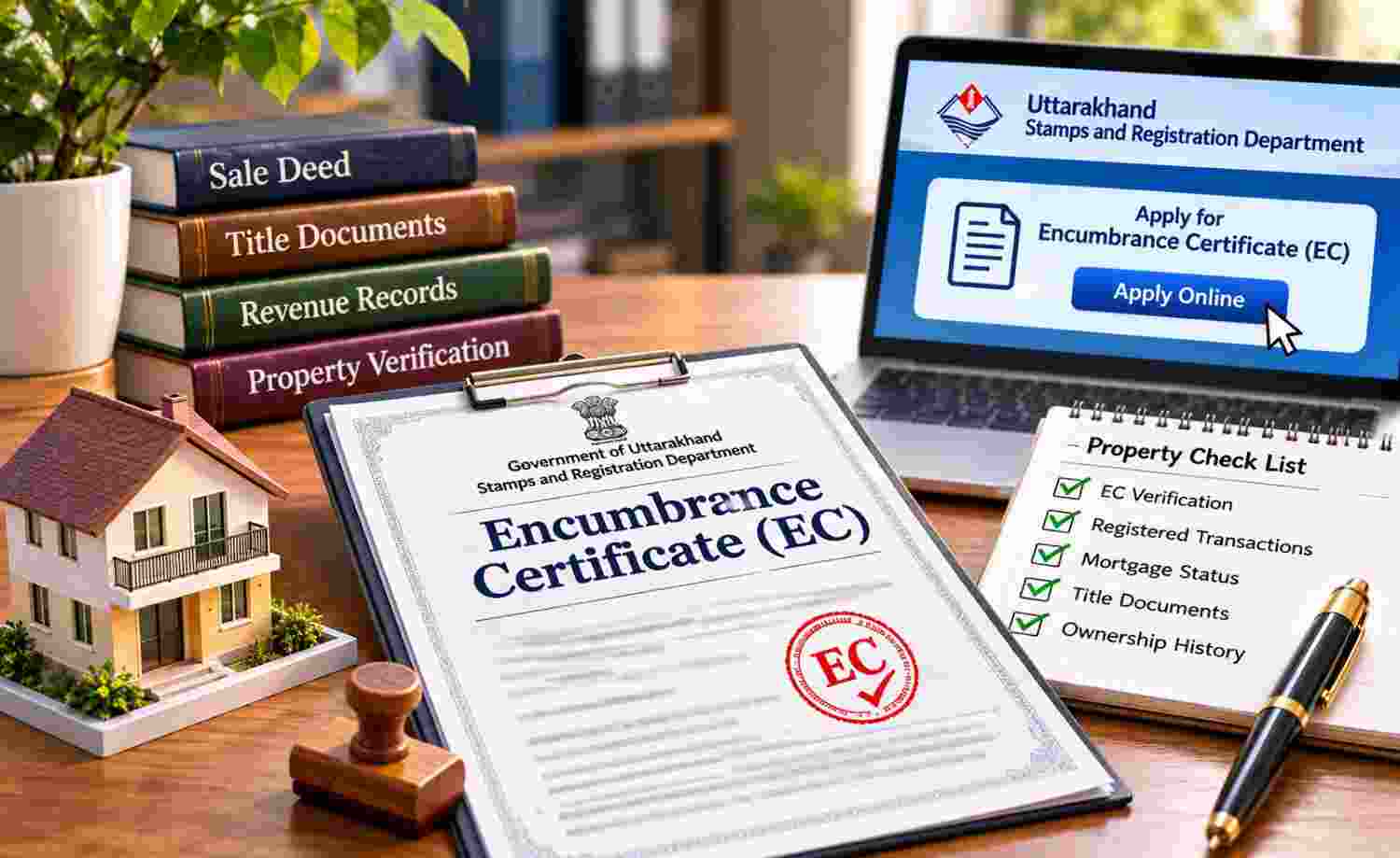
Encumbrance Certificate in Uttarakhand: How to Check Property Transaction History Before Buying
Published: November 3, 2026
Last Updated: November 3, 2026
Quick Answer: An Encumbrance Certificate (EC) in Uttarakhand helps property buyers check registered transactions and recorded encumbrances relating to a property for a specified search period. You can apply through the Uttarakhand Stamps and Registration Department's online EC service or seek assistance from the relevant Sub-Registrar Office. However, an EC alone does not establish complete legal ownership or guarantee that a property has no disputes. Always check title documents, revenue records and other relevant legal records before purchasing.
Key Takeaways
An Encumbrance Certificate helps identify relevant registered transactions recorded against a property during the period searched.
Uttarakhand provides an online Encumbrance Certificate service through its Stamps and Registration Department.
Applicants may need property identification details, registration-office information and the period they want searched.
A clear EC does not automatically prove that the seller has a perfect title.
Buyers should also examine sale deeds, revenue records, certified copies and applicable loan-release documents.
The search period and property identification details matter when reviewing an EC.
Who this guide is for: Residential property buyers, land investors, homeowners, and people planning to purchase agricultural or non-agricultural property across Uttarakhand.
Use case: Checking registered property transaction history and identifying possible recorded encumbrances before paying an advance or completing a property purchase.
What Is an Encumbrance Certificate in Uttarakhand?
An Encumbrance Certificate is an official record-search certificate of registered transactions and encumbrances related to a property during a specified period.
It helps a buyer determine whether relevant registered transactions, such as a sale, mortgage, or other registered interest, appear in the records searched by the registration department.
For example, imagine that you are planning to purchase a residential plot in Haridwar. The seller provides a sale deed and claims that the property has no outstanding registered mortgage. An EC search can help you investigate the relevant registration records for the property and the period requested.
The same due-diligence approach can be useful when purchasing property in Dehradun, Nainital, Haldwani, Rishikesh, Roorkee, Rudrapur, Almora or other parts of Uttarakhand.
However, the certificate should be understood within its scope. It reports the records searched; it does not independently establish every aspect of ownership or reveal every possible legal claim.
Why Should Property Buyers Check an Encumbrance Certificate in Uttarakhand?
Buying land or a house involves more than checking the asking price and the seller's identity. Buyers should understand the property's ownership history and investigate whether relevant registered interests may affect the transaction.
An EC can support this process in several ways.
1. Check registered property transactions
An EC search can help identify relevant registered transactions associated with the property during the requested period. These entries can provide useful information about its recorded transaction history.
2. Identify recorded mortgages or other interests
A registered mortgage or another recorded interest may affect a property's transfer or the buyer's plans. If an entry indicates a loan or mortgage, ask for the relevant documents and confirmation of its current status.
3. Review changes in recorded ownership
Property may change hands through sale, gift, inheritance, partition or other legally recognised arrangements. Reviewing relevant registration records can help you understand the recorded transaction history.
4. Support property loan documentation
Banks and financial institutions may ask for property-related documents and legal verification when processing a loan. An EC can form part of the document review, but the lender may require additional records and a legal opinion.
5. Reduce the risk of overlooking registered transactions
A seller's verbal assurance is not enough. Reviewing official registration records gives buyers another way to investigate the property before committing their money.
How to Get an Encumbrance Certificate in Uttarakhand Online
The Uttarakhand Stamps and Registration Department provides an online Encumbrance Certificate facility through its e-registration services.
Follow these general steps:
Step 1: Visit the official registration portal
Open the Uttarakhand e-Registration portal.
Look for the Encumbrance Certificate service under the department's online services. You can also visit the department portal to find its EC-related resources and user guidance.
Step 2: Register or log in
If the service asks you to create an account, complete the registration process using the requested applicant details.
Existing users can log in using their registered credentials.
Follow the current portal instructions rather than relying on screenshots from an older version of the website.
Step 3: Select the property search method
The department's published EC procedure describes search options that include:
Search by property number
Search by party name, such as seller, purchaser or claimant
Choose the method that matches the property information available to you.
Step 4: Enter the property details
Depending on the selected search method, you may need details such as:
District
Sub-Registrar Office (SRO)
Village
Property or Khasra number, where applicable
Previous property number, where applicable
Seller, purchaser or claimant name
Property registration details
Enter the information carefully. Incorrect spelling, incomplete property identifiers or selection of the wrong registration office can affect the search.
Step 5: Select the search period
Enter the From Date and To Date for the registration records you want examined.
The search period is important because a certificate covering only a limited period cannot establish what happened before that period.
For a property purchase, discuss the appropriate search period with your property lawyer. Where necessary, investigate earlier ownership transactions and obtain relevant certified copies.
Step 6: Submit the application and check the fee
Review the information before submitting the application.
If the portal generates an application fee, follow the payment instructions displayed there. Keep the payment acknowledgement and application reference for future use.
Important: Do not rely on an old online fee figure or processing-time estimate. Check the current portal or the relevant Sub-Registrar Office for the applicable charges and service timeline.
Step 7: Track and obtain the certificate
Use the portal's available application-status or completed-application options to check progress.
After the certificate is issued, download or obtain the official document through the available process. Review the property details, search period and entries carefully.
The department also provides an Encumbrance Certificate User Manual and Procedure through its official resources section.
What Details Are Required for an Encumbrance Certificate in Uttarakhand?
Prepare the relevant property information before starting the application.
The exact fields depend on the application method and the information available for the property. If the property number has changed or the records contain older descriptions, seek guidance from the relevant registration office.
What Information Does an Encumbrance Certificate in Uttarakhand Show?
An EC should be read as a record of the entries found during the specified search, not as a complete history of every event affecting the property.
Depending on the records searched, it may help identify:
Registered sale or transfer transactions
Recorded mortgage-related transactions
Other relevant registered interests or transactions
Names of parties appearing in registered documents
Registration details and dates
Relevant document references
If the certificate contains an entry you do not understand, obtain the corresponding registered document or certified copy and ask a qualified property lawyer to review it.
A document reference alone may not explain whether a mortgage has been repaid, whether a release has been registered, or whether another legal issue remains unresolved.
What Does a Clear Encumbrance Certificate in Uttarakhand Not Guarantee?
This is one of the most important points for property buyers.
A certificate showing no relevant entry for the period searched does not automatically mean that the property is completely free from every legal issue.
An EC search may not reveal every matter that can affect ownership or possession.
The Uttarakhand Registration Department's property-purchase guidance also advises buyers to examine title, revenue records and supporting documents rather than depending on a single record.
Documents to Verify Alongside an Encumbrance Certificate in Uttarakhand
A reliable property check should combine registration records with other relevant documents.
1. Sale deed and previous title documents
Ask the seller for the current sale deed and earlier ownership documents. Review how the seller acquired the property and whether the available documents support the claimed ownership.
2. Revenue records
For agricultural land and other relevant parcels, examine the applicable revenue records, including Khata, Khatoni and Khasra details.
The Government of Uttarakhand provides access to land-record services through its Bhulekh portal. Check the relevant process for obtaining an authorised record where required.
3. Certified copies of registered documents
If the EC or e-Search identifies an important transaction, obtain the relevant registered document or certified copy through the registration department's prescribed process.
Do not make a decision based only on a short transaction entry when the underlying document needs examination.
4. Mortgage release documents
If the property was used as security for a loan, ask the seller for the lender's appropriate release or satisfaction documentation.
A payment receipt alone may not establish that the registered mortgage has been formally released.
5. Approved layout and planning documents
If you are purchasing a plotted development, check the applicable layout approval and planning permissions with the competent authority.
6. Physical property inspection
Visit the property and compare its location, boundaries, access and possession details with the documents. Where needed, arrange a professional survey.
Common Mistakes Buyers Should Avoid
Checking only the latest transaction
A recent sale deed does not automatically establish the complete ownership history. Review the earlier title documents and relevant registered transactions as well.
Selecting the wrong search period
If the EC covers only a short period, older transactions may remain outside the search. Discuss the appropriate period with a property lawyer.
Entering incorrect property details
A search using an incorrect Khasra number, village or SRO can produce incomplete or irrelevant results. Cross-check the identifiers against the property documents.
Assuming a clear EC means clear ownership
An EC is one part of legal due diligence. It should not replace title verification, revenue-record checks or investigation of other relevant claims.
Ignoring mortgage release documents
If an earlier loan appears in the records, ask for evidence of repayment and the appropriate release or satisfaction documentation.
Relying entirely on the seller's documents
Verify important documents independently through the relevant government office or official portal. Seek a legal opinion before finalising the transaction if any inconsistency appears.
Official Resources for Encumbrance Certificate Verification in Uttarakhand
Use these government resources to begin your verification:
Uttarakhand e-Registration Portal — online registration-related services, including the Encumbrance Certificate facility.
Stamps and Registration Department Portal — department information, EC guidance, FAQs and other registration resources.
e-Search for Registered Documents — search options for registered property documents.
Department of Stamps and Registration — official departmental information, acts, notifications and resources.
Uttarakhand Bhulekh — access to relevant land and revenue-record information.
For property-specific issues, contact the relevant Sub-Registrar Office or consult a qualified property lawyer.
Conclusion
Checking an Encumbrance Certificate in Uttarakhand is an important step when investigating a property's registered transaction history before purchase. The state's online registration services allow applicants to access EC-related facilities and search registered documents.
However, a clear certificate should never be treated as a complete guarantee of ownership. Review the search period, examine relevant registered documents, verify revenue records, check mortgage-release documents where applicable and inspect the actual property.
Whether you are purchasing land in Dehradun, Haridwar, Nainital, Udham Singh Nagar, Tehri Garhwal or another district, careful document verification can help you make a more informed property decision.
For more information about the company, visit Anshika Developers and explore our About Us page. For a property-related enquiry, visit our Contact Us page.
Latest Blogs
You may also find these articles helpful: